
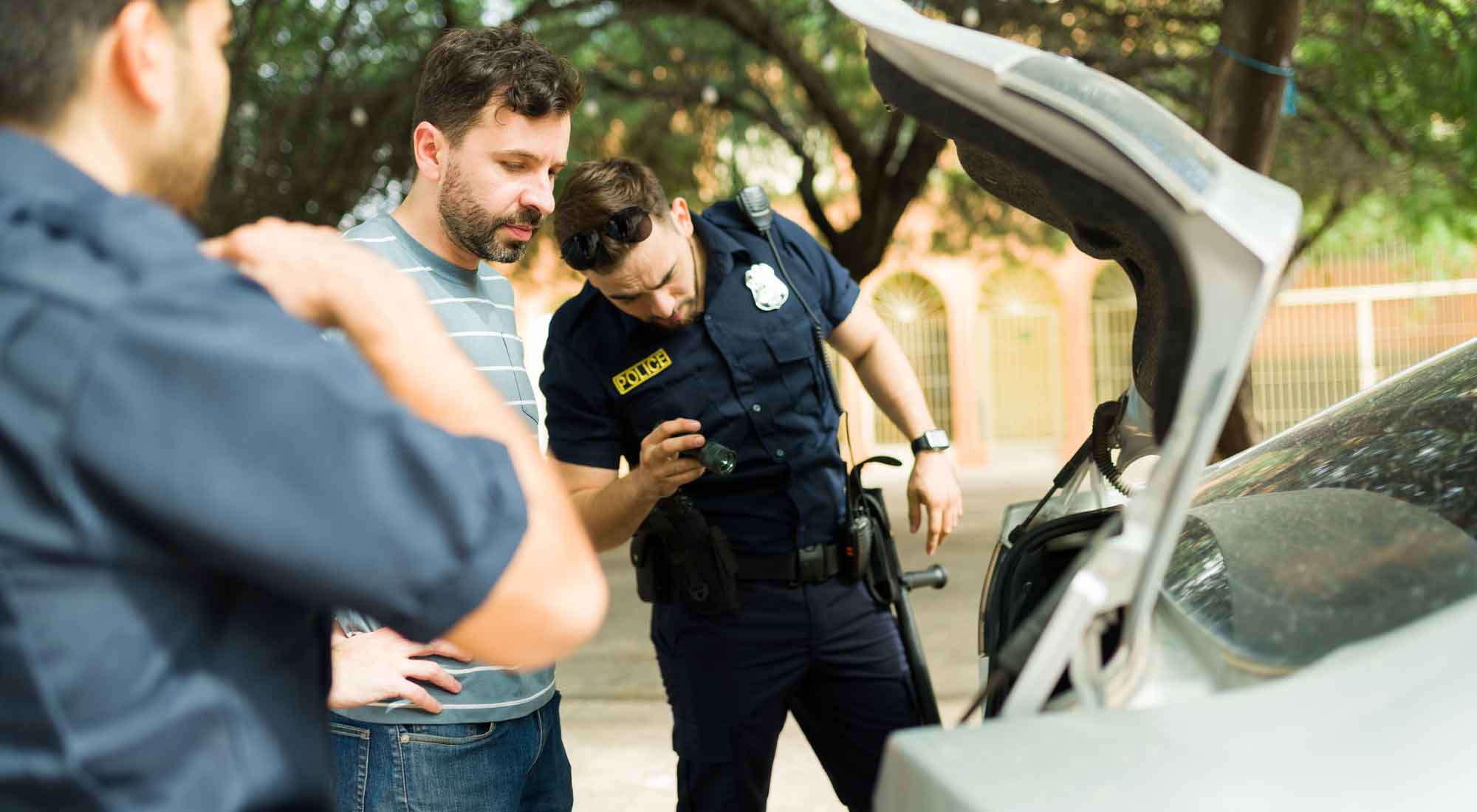
Imagine you’re pulled over for a routine traffic stop. An officer asks if they can search your vehicle. Or perhaps police arrive at your home asking to come inside. Maybe you’ve been arrested and officers want to look through your cell phone. Do you have to let them?
The answer depends on the circumstances. Both the Fourth Amendment to the United States Constitution and the Florida Constitution protect citizens against unreasonable searches and seizures. In most cases, law enforcement officers must obtain a warrant before searching your home or the contents of your cell phone. However, there are several important exceptions that every Florida resident should understand.
If you believe your rights were violated during a search, an experienced Florida criminal defense attorney may be able to challenge the evidence obtained against you.
Your Fourth Amendment Rights
The Fourth Amendment protects individuals from unreasonable government searches and seizures. Before searching your private property, police generally need probable cause and, in many situations, a warrant issued by a judge.
These constitutional protections are designed to balance effective law enforcement with every person’s right to privacy.
When officers fail to follow these legal requirements, evidence obtained during an unlawful search may be excluded from court.
Can Police Search Your Car Without a Warrant?
Vehicle searches are treated differently than searches of homes because automobiles are mobile and can quickly leave the scene.
Police may legally search your vehicle without a warrant under certain circumstances, including:
- You voluntarily give consent.
- Officers have probable cause to believe the vehicle contains evidence of a crime.
- Illegal items are visible in plain view.
- The search occurs following a lawful arrest.
- The vehicle is lawfully impounded and subject to an inventory search.
For example, if an officer observes illegal drugs, smells marijuana where legally relevant, or sees a firearm in plain view, those observations may establish probable cause for a search.
However, police cannot search your vehicle simply because they are suspicious or because you refused to answer questions. Every warrant-less search must be supported by a recognized legal exception.
Can Police Search Your Cell Phone?
Today’s smartphones contain years of personal information, including text messages, photographs, financial records, medical information, emails, social media accounts, and location history.
Because of the vast amount of private data stored on mobile devices, the United States Supreme Court has held that police generally must obtain a search warrant before examining the contents of a cell phone, even if the phone was taken during an arrest.
There are limited exceptions, such as certain emergency situations where immediate action is necessary to protect public safety or prevent the destruction of evidence. These exceptions are narrowly applied.
If officers searched your phone without a warrant or a valid legal exception, your attorney may be able to file a motion asking the court to suppress that evidence.
Can Police Search Your Home Without a Warrant?
Your home receives the strongest constitutional protection.
In most situations, police must obtain a search warrant signed by a judge before entering your residence.
There are a few exceptions that may allow officers to enter without first obtaining a warrant, including:
- You voluntarily consent to the search.
- Officers are in “hot pursuit” of a fleeing suspect.
- Someone inside is in immediate danger.
- Emergency circumstances require immediate action.
- Officers reasonably believe evidence will be destroyed before a warrant can be obtained.
Absent one of these exceptions, evidence obtained from an unlawful entry into your home may be challenged in court.
What Does “Consent” Really Mean?
Many warrant-less searches occur because someone unknowingly gives permission.
An officer may ask:
“Would you mind if I take a look?”
You generally have the right to politely decline a request to search your property.
If you voluntarily consent, you may lose the opportunity to later argue that the search was unlawful.
You should never physically resist law enforcement. Instead, calmly state that you do not consent to the search while remaining respectful throughout the encounter.
What Happens If Police Conduct an Illegal Search?
If law enforcement violates your constitutional rights, the court may prohibit prosecutors from using the illegally obtained evidence against you under the Exclusionary Rule.
This legal doctrine can significantly affect a criminal case. If key evidence is suppressed, prosecutors may have difficulty proving the charges beyond a reasonable doubt. In some situations, charges may be reduced or even dismissed.
Every case is unique, and determining whether a search was lawful requires careful legal analysis.
Protecting Your Rights After an Arrest
Many people assume that if police searched their property, the search must have been legal. That is not always true.
An experienced criminal defense lawyer in Stuart, Florida, can carefully review the facts surrounding your arrest to determine:
- Whether officers had probable cause.
- Whether valid consent was given.
- Whether a warrant was required.
- Whether your constitutional rights were violated.
- Whether evidence should be suppressed.
Examining the legality of a search is often one of the first and most important steps in building a strong criminal defense.
Contact Lance P. Richard, P.A.
If you have been charged with a crime after police searched your phone, vehicle, or home, you should speak with an experienced attorney as soon as possible. Protecting your constitutional rights can have a significant impact on the outcome of your case.
Lance P. Richard has extensive experience representing individuals facing criminal charges throughout Florida. He thoroughly investigates every case to determine whether law enforcement acted within the law and aggressively protects his clients’ constitutional rights.
If you have questions about an arrest, an investigation, or a warrant-less search, contact Lance P. Richard, P.A. today to schedule a confidential consultation and discuss your legal options.
Need help? Learn more about working with a Stuart criminal defense lawyer, or call (772) 223-9600 for a free consultation.